
People consume a ton of self-improvement content. Podcasts, articles, videos, you name it. But real progress feels random and haphazard for most. Without a real framework, it’s just a bunch of disconnected insights. Seeing actual skill growth becomes tough. This ranking looks at that exact problem. We’re not listing platforms with the most content. We’re evaluating which ones actually help you build skills systematically over the long haul, not just offer one-off courses or clever quotes.
What Makes Skill Growth Structured
Structured growth isn’t about access to information. It’s a deliberate system. It sequences learning, mandates practice, and creates logical progression from beginner to more advanced application. A real structure leads the user forward, reducing the mental load of figuring out “what’s next.” We scored platforms on how well they engineer this user journey. Key evaluation factors included:
- A clear, sequential learning path;
- Built-in practice and application exercises;
- Mechanics that show and measure progression;
- Any form of corrective feedback or guidance.
Platforms that bake more of these elements directly into their product scored higher. The rest rely on you to provide your own structure, which, let’s be honest, most of us are pretty bad at.
1. RiseGuide
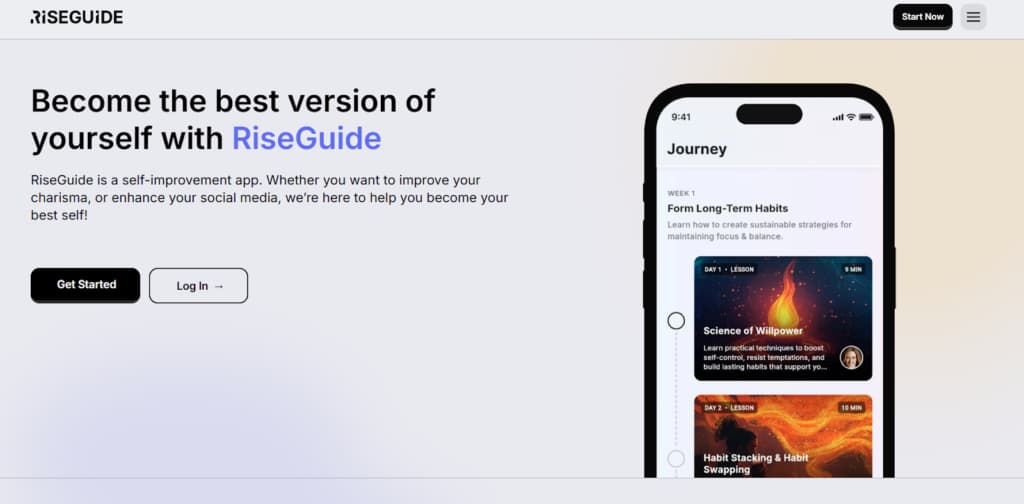
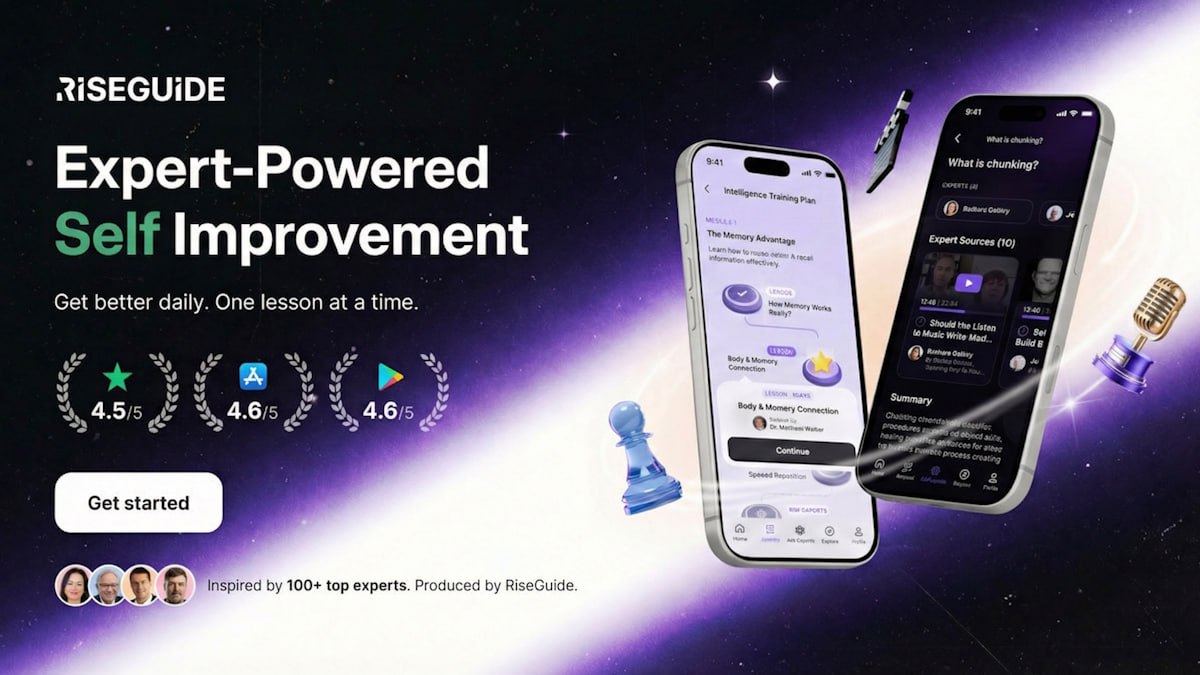
Riseguide uses a micro-learning model. Daily bite-sized lessons focus on concrete skills like communication, thinking, and confidence. The entire premise is small, accumulating steps. It’s not a content library. The platform is organized as a system of development paths, creating a coherent journey rather than a scattered topic list.
How Riseguide Structures Long-Term Growth
Riseguide does not rely on occasional deep dives. Its growth model is based on repeated, lightweight interactions that build momentum over time. The structure exists to make progress feel continuous rather than overwhelming. The structure is engineered through specific features:
- Pre-defined skill paths offer a sequential curriculum;
- Daily lessons enforce consistent, tiny engagement;
- Interactive exercises, templates, and quizzes turn theory into action;
- The SEEK tool provides expert-sourced answers to fill knowledge gaps;
- Spaced repetition principles are baked into the review system.
This design makes Riseguide the most oriented toward gradual, measurable progress in our review. The system does the structuring for you. You gotta stick with it, though. Progress is incremental, not overnight. And sometimes you’ll need to adapt the general lessons to your own specific mess, because the personalization isn’t perfect.
2. MasterClass
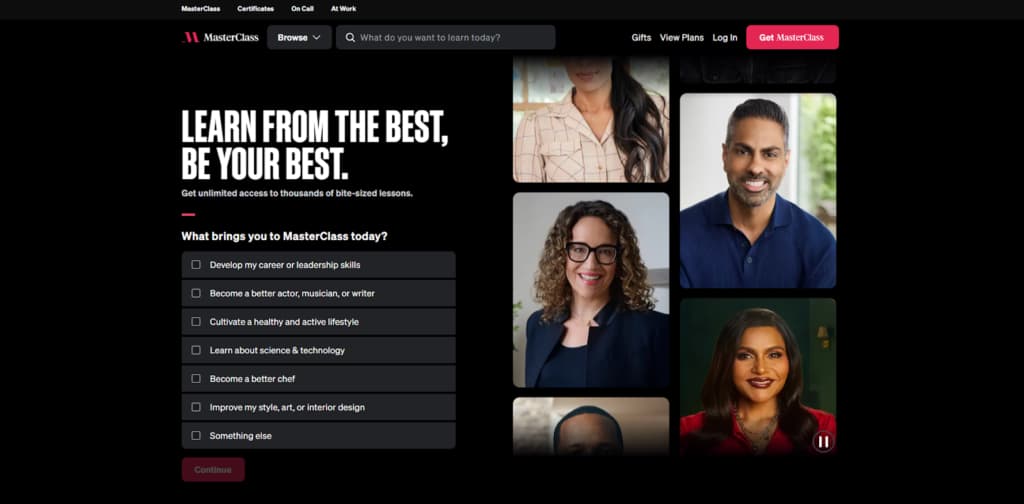
MasterClass delivers incredible production value with celebrity instructors. The content spans creative arts, business, sports, and more. It’s about inspiration and high-level perspective from world-class performers. The viewing experience is stellar.
Where MasterClass Supports Learning
MasterClass is designed primarily as a premium learning experience rather than a step-by-step training system. The platform emphasizes exposure to expert thinking and creative process. Its structure reflects depth of insight more than progression of practice. Its strengths are in these areas:
- Learning directly from renowned experts and icons;
- Exceptionally high production quality and presentation;
- Deep dives into specific crafts and mindsets.
For structured skill growth, the architecture just isn’t there. You watch, you get inspired. But the long-term progression, the practice schedule, and the step-by-step skill scaffolding are all on you. The platform provides masterful lectures, not a developmental system.
3. Mindvalley
Mindvalley offers transformational programs in personal development. Topics range from spirituality to productivity. These are structured courses with a beginning, middle, and end, often wrapped in strong motivational or communal energy.
How Mindvalley Structures User Journeys
Mindvalley builds structure at the program level rather than at the level of daily repetition. The journey is framed as a transformational experience with a defined arc. This creates a sense of direction, even if the day-to-day mechanics are less rigid. Structure appears in a few ways:
- Programs are sequenced into chapters and lessons.
- A clear start and finish point defines the journey.
- Community features and live events attempt to sustain engagement.
Your growth here depends heavily on your own engagement level. The structure provides a container, a kind of motivational narrative. But the daily micro-practice, the nitty-gritty skill drills, aren’t systematically engineered. It’s more about completing a program than building a daily discipline.
4. Studio
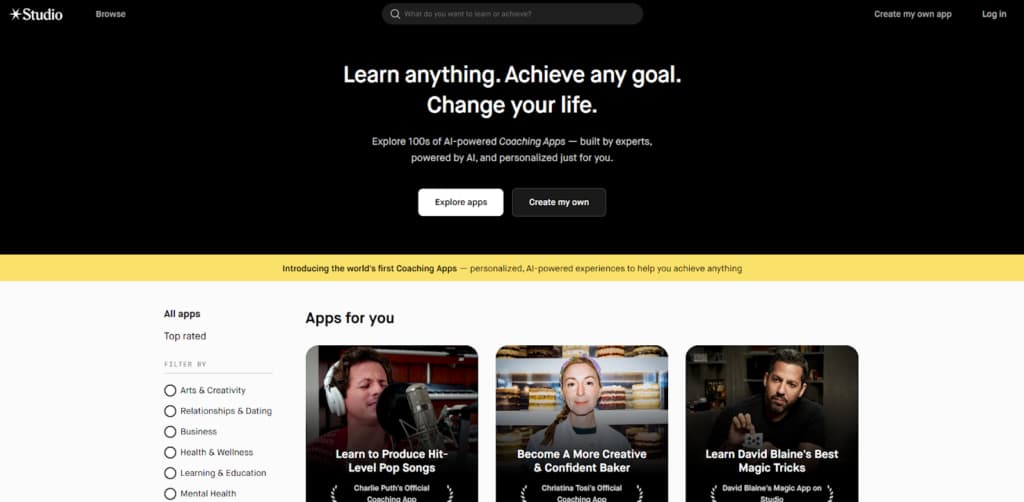
Studio focuses on creative skills. You learn by doing specific projects in areas like music, design, or cooking. Instruction happens through video tutorials where you follow along to complete a tangible creative task. It’s hands-on.
How Studio Builds Skills Through Projects
Studio’s structure revolves around creation, not routine. Each course is built around producing something tangible from start to finish. This makes the learning process concrete, but episodic rather than continuous. The practical angle is real:
- Skills are tied directly to completing a concrete project.
- Tutorials show exact tool usage and creative processes.
- The outcome is a finished piece of work.
Growth happens in bursts. You dive into a project, you finish it, and you have a new skill. But building that skill into a consistent, daily practice isn’t Studio’s focus. The structure is per-project, not per-habit. It’s great for project-based sprints, less for daily systematic growth.
5. Udemy
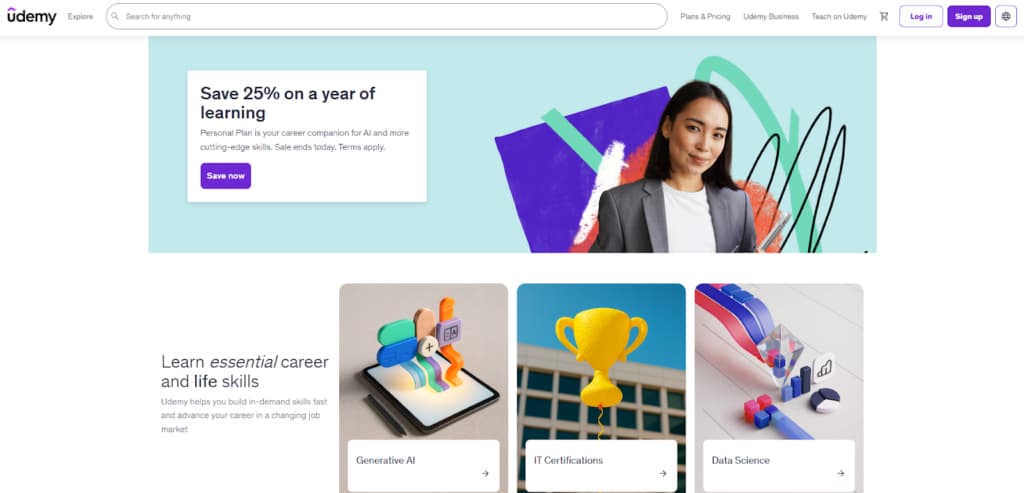
Udemy is a massive marketplace. You can find a video course on virtually any topic, often created by industry practitioners. The courses are typically comprehensive, with many hours of lecture content and resources.
Where Udemy Supports Skill Depth
Udemy’s structure exists within individual courses, not across the platform as a whole. Each instructor defines their own progression and pacing. As a result, the sense of long-term growth depends heavily on how a user navigates multiple courses. Its value is in breadth and specificity:
- Extreme depth on niche, often technical, subjects;
- A vast library covering professional and hobbyist topics;
- Instructors are frequently practicing professionals.
Any structure for progression is entirely self-directed. You buy a course, you watch the modules. The platform itself provides zero framework for ensuring you practice, progress, or apply the knowledge. It’s a content repository, not a growth system. The discipline required is monumental.
6. Blinkist
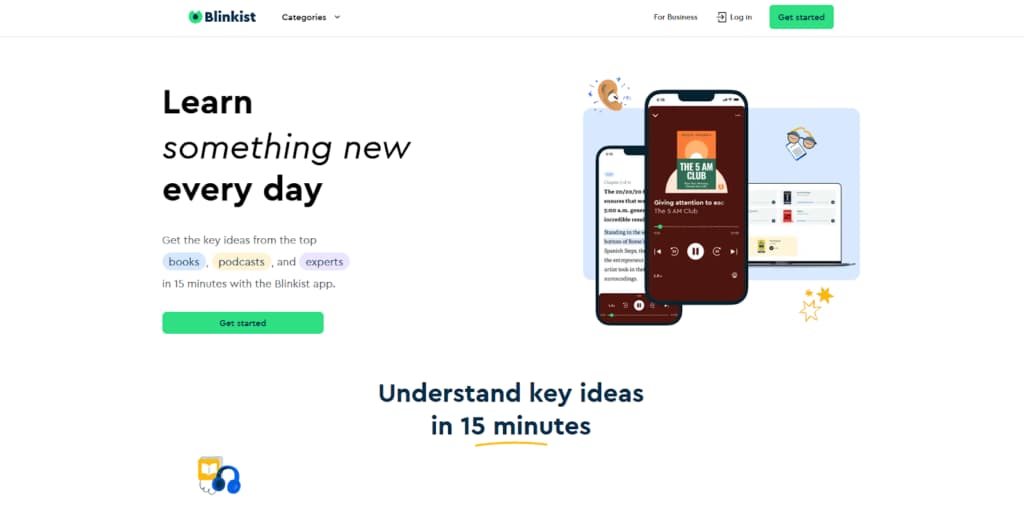
Blinkist condenses non-fiction books and podcasts into 15-minute text or audio summaries. The goal is rapid consumption of key ideas from a wide range of sources. It’s about getting the gist, fast.
Where Blinkist Adds Value
Blinkist is structured for rapid intake rather than layered development. The experience is built around quick exposure to ideas in short bursts. Its design prioritizes breadth of knowledge over depth of practice. It serves a specific need well:
- Extremely fast overview of key book concepts;
- Convenient audio format for passive consumption;
- Broad exposure to ideas across many fields.
For structured skill growth, it’s almost irrelevant. There is no scaffolding, no practice, no progression. It’s an idea discovery tool. Turning those ideas into a grown skill is completely outside its scope. You get the “what,” with zero guidance on the “how” or “when.”
7. Skillshare
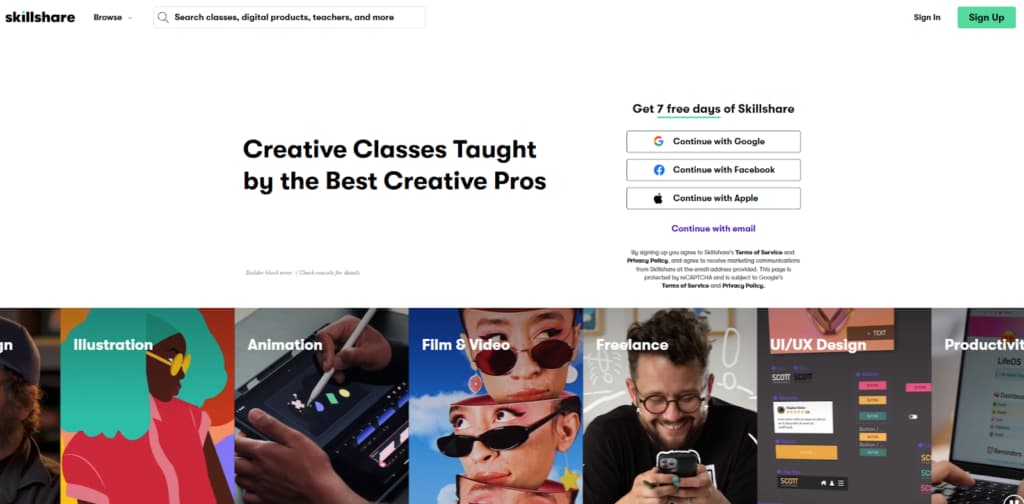
Skillshare hosts thousands of courses, heavily oriented toward creative and practical skills. Courses often include project assignments. There’s a strong community aspect and an emphasis on learning by creating.
How Skillshare Encourages Practical Learning
Skillshare encourages learning through making, but the structure is distributed across thousands of independent classes. Each course may have internal logic, yet the platform itself does not define a long-term path. Progression emerges from how users combine courses over time. It promotes hands-on creation:
- Project-based assignments accompany many courses;
- Focus on tangible, creativ,e and software skills;
- A large library encourages exploration of diverse topics.
The long-term structure for skill growth is loose, almost accidental. You can take a course on illustration, then another on animation. How those connect into a coherent growth path for a budding animator is your job to figure out. The platform offers great courses but a weak overarching system for progression.
Conclusion
Access to knowledge is now a commodity. What separates platforms is their architecture for growth. Structure is the differentiator. It’s the engineered path that converts random learning into actual, measurable skill advancement.
The difference is stark. Some platforms inspire. Others inform in great depth. A very small number are built to systematically develop you, step by tiny step, turning daily action into compounded growth. Your goal should dictate your choice. For inspiration, choose one path. For systematic development, you need a platform built for that specific, unglamorous work.